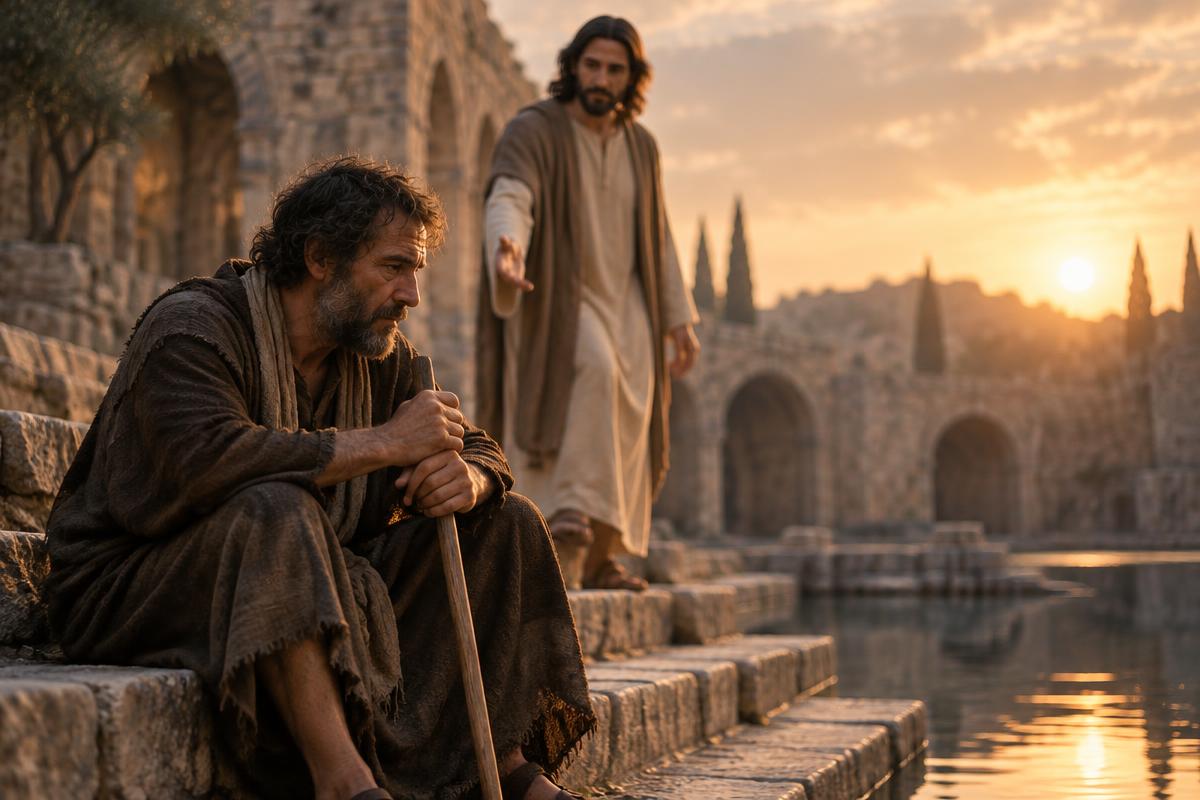

Everyone who helps people for long enough meets the same evening: the last conversation is over, the room is quiet, and there is nothing left inside. Not a crisis, just emptiness. It rarely arrives dramatically. It accumulates.
The people most at risk are not the careless ones. They are the faithful: the pastor who answers every message, the coach who never says no, the mother who absorbs everyone's weather. Their strength is precisely what hides the depletion, because they can keep performing long after they have stopped being present.
Jesus, who had more legitimate demands on His time than anyone in history, regularly withdrew. Crowds were still waiting. Needs were still unmet. He left anyway. That is not a footnote in the Gospels; it is a model that most of us quietly consider optional.
The first discipline is honest noticing. Depletion shows up before it announces itself: irritation at people you love, cynicism about stories that used to move you, relief when someone cancels, an inability to be interested in anything after six in the evening. These are data, not character flaws.
The second is limits chosen in advance. Decide how many serious conversations you can hold in a week before your calendar decides for you. Saying yes to everyone is not generosity; it is usually a fear of disappointing people dressed up as service. And the person you shortchange is always the one who comes last — often your own family.
The third is someone who asks about you. Anyone who spends their life asking others hard questions needs a place where they are the one being asked. A spiritual director, a therapist, a peer, an old friend who is unimpressed by your role. Helpers without help become performers of wholeness.
The fourth is a life outside the work. Friendships where you are not useful. Hobbies with no redemptive purpose. A Sabbath that is genuinely unproductive. People whose entire identity is being needed will eventually need to be needed, and that need quietly distorts the help they give.
The fifth is prayer that is not preparation. Time with God where you are not gathering material, reviewing someone else's situation, or asking for wisdom on their behalf — simply being a son or daughter with nothing to deliver. Most burnout among believers is not overwork; it is working for a Father we have stopped enjoying.
There is also grief to name. If you carry people's stories, you carry their losses too, and much of it cannot be shared. That weight needs somewhere to go: confession, tears, writing, a walk, a friend. Unprocessed grief does not disappear, it hardens.
None of this is self-indulgence. A dry well serves no one, and the ministry that costs you your health, your marriage, or your joy was never the one you were asked to carry. Care for the helper is not a break from the work. It is what allows the work to last thirty years instead of five.